
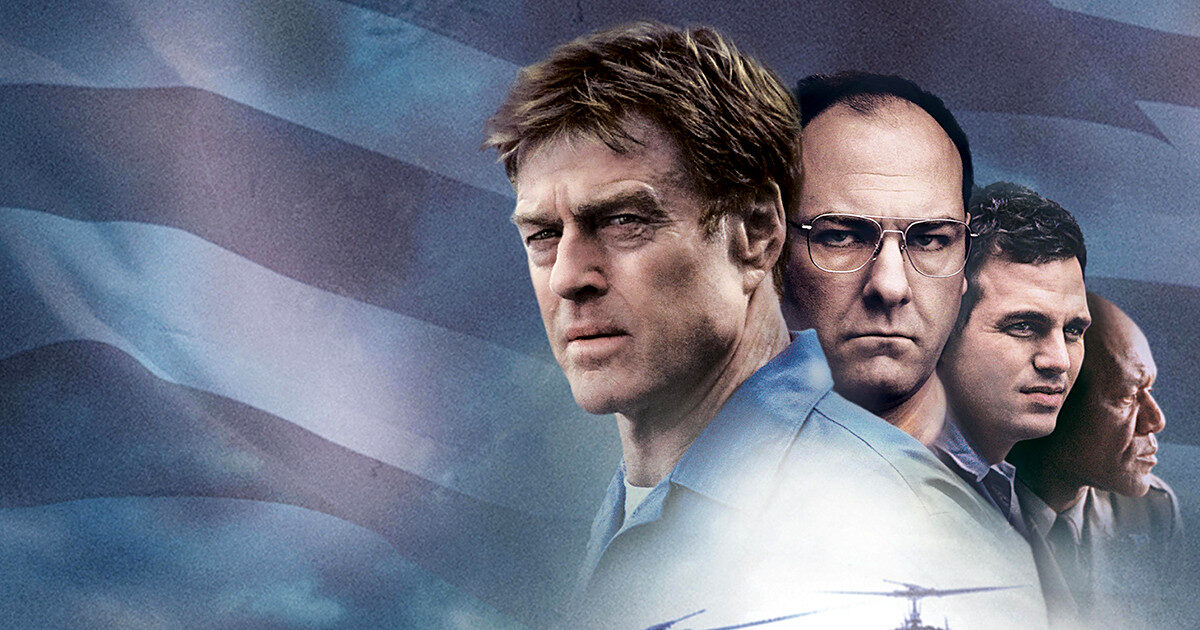
Rod Lurie’s military-prison drama The Last Castle opened on October 19, 2001, and turns 25 this week. It is also a production full of details even regular viewers miss, from a poster pulled over national sensitivity to a prison that had already played other famous lock-ups.
The poster was pulled after September 11
Before release, DreamWorks pulled the original poster from circulation. It depicted an American flag flying upside down, a standard distress call, because of concerns about public sensitivity related to the September 11 attacks. The film still opened in 2,262 North American theaters on October 19, 2001.
It used a 103-year-old prison
The main location was the former Tennessee State Prison in Nashville. The 103-year-old facility had already been used for The Green Mile and Last Dance, and it was chosen specifically because of its Gothic and castle-like appearance.
Tennessee made the location rent-free
The state of Tennessee offered the production the location rent-free. It also provided an exemption from the state’s 6 percent state sales tax, helping the Gothic landmark become the prison on screen.
Gandolfini earned $5 million for the role
James Gandolfini earned $5 million for co-starring in the film. He took the part after finishing the third season of The Sopranos in March 2001. The film was released that October.
A 200-foot wall was built in nine weeks
A crew of 150 had a time limit of nine weeks to refurbish existing buildings and construct new ones. They built a wall 61 metres (200 ft) long and six metres (20 ft) high as the prison entrance, plus a metal walkway, two towers and an office with a large window for the warden.
The cells were built in a warehouse
Director Rod Lurie insisted on having the prisoners’ cells face each other. The Tennessee State Prison does not offer that arrangement, so production designer Kirk Petruccelli created cells in a warehouse near the prison.
Camera and color tracked the power shift
To show the balance of power, the crew used color, lighting, camera and costumes. The yard was naturally lit and shot with hand-held cameras early on, while Winter’s office was artificially lit and composed in a sterile way. As the story progresses, exterior light enters through a broken window and the prisoners’ world becomes more precise.
Costumes changed with the prisoners
Costume designer Ha Nguyen used clothing to show the shift. Prisoners first wore clothing divided by ethnicity, then adopted more similar clothing in a sharp military manner. Uniforms also changed from chocolate brown to light grey because the brown looked muddled and too dark on film. Nguyen contrasted Colonel Winter’s non-battlefield ribbons with General Irwin’s battlefield medals.
Which of these The Last Castle details surprised you? Tell us your favourite fact about the film, or the one you wish more people noticed.
Facts from Wikipedia: The Last Castle, available under CC BY-SA 4.0.
Film images from TMDB. This product uses the TMDB API but is not endorsed or certified by TMDB.