
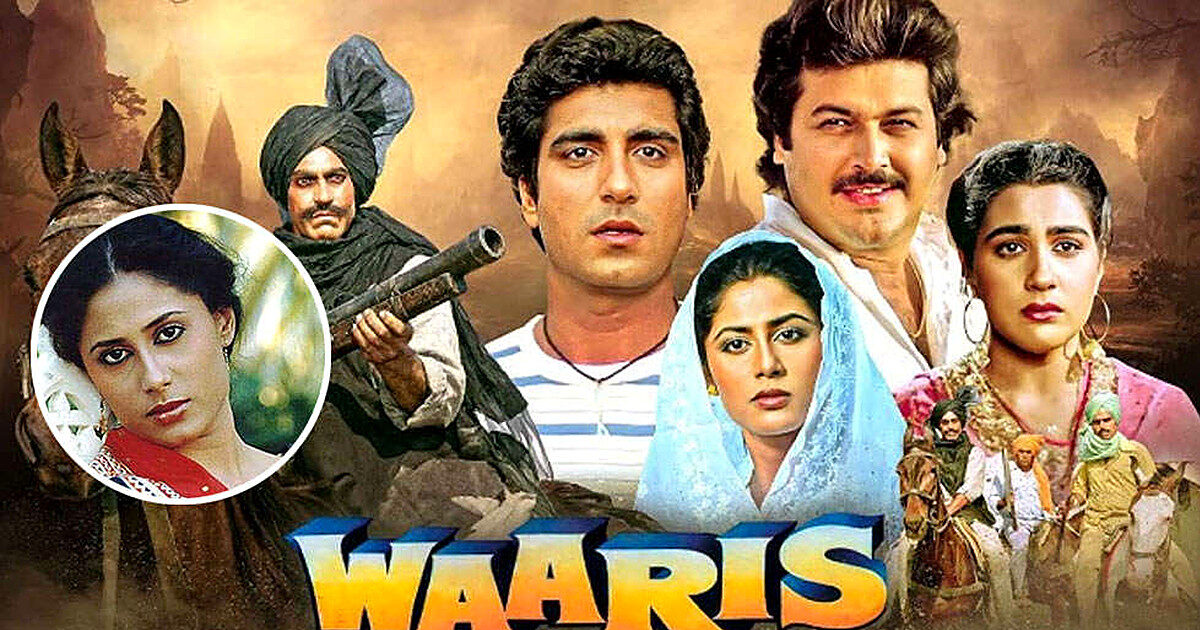
Four decades after Waaris, producers J S Cheema and Baldev Gill have shared how Smita Patil became the film’s centre of gravity—starting with a decision that still surprises: she charged no fee.
The team had already made the National Award-winning Punjabi superhit Chann Pardesee. In a conversation with Filmfare, they recall that Waaris began as a Punjabi project called Muklaawa. After director Ravinder Peepat’s narration, Smita suggested taking the script to Hindi for a wider audience, put remuneration aside, and gave her dates priority while working double shifts.
No fee, no shortcuts
What followed, the makers say, was preparation in the truest sense.
- In Haryana, she studied how village women cut fodder and lifted heavy bundles on their heads, and matched each movement.
- For a key widowhood line, she took a day off and returned with a perfect shot.
- In Rajpipla, she checked her own costume and make-up, and then the other actors’ looks too.
“Smita got under the very skin of the character Paro brilliantly,” the makers say, but she also stopped when she felt she wasn’t doing justice to a scene.
A rewrite on instinct
That refusal to settle showed in the Samadhi sequence. Smita asked Baldev Gill to rewrite the scene the way he had first written it in Punjabi, because the Hindi version felt less effective. He translated the lines word for word, and she gave the shot.
Opposite Amrish Puri, the makers recall, she held her own in their face-off—eyes blazing in a scene where his character pushes and slaps her.
Finishing before delivery, then a voice handover
With a song and some patchwork remaining, Smita insisted on finishing before her delivery was due. She shot “Aare munjhe, taare munjhe” and completed her work; she did not live to dub her own voice.
Out of respect, Rekha and Shabana Azmi offered to dub for her. Rekha began by listening to Smita’s original track. When Gill felt the words were there but the thought was missing, Rekha asked what to find—and after absorbing the spirit of the character, she completed the dubbing without a flaw.
Why it still matters
For today’s viewers, this is more than a golden-age memory. It shows how a lead performer’s insistence on truth can change a film’s language, schedule and final texture. The makers say Waaris would not have been half the film without her support, and call Smita Patil its soul and spirit.
Source: Filmfare