
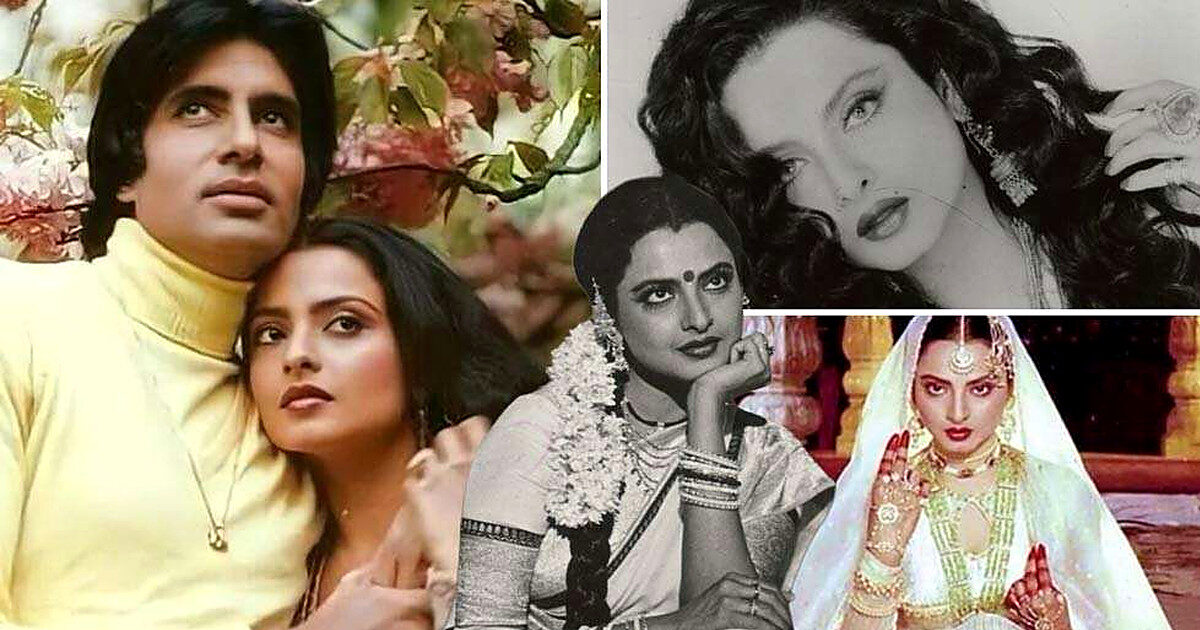
In a new Filmfare editorial, the spotlight moves away from the headlines that have followed Rekha for decades and back onto the work that makes her a defining Hindi film actor. The piece is part memoir, part film appreciation: the writer recalls meeting Rekha as a young journalist, watching her move between guardedness and candour, and returning to the films where she did the talking.
The actor behind the image
The editorial acknowledges the labels—’diva’, ‘ivory tower queen’, ‘sexy superstar’—but argues they have all had a shorter shelf life than Rekha herself. What survives, it says, is a performer whose best scenes work because she makes the craft and the artist impossible to separate.
The roles that built the reputation
Ghar (1978) is treated as the reminder of that craft. Though Manik Chatterjee passed away during the making and Gulzar completed the film, Rekha’s work as a housewife dealing with the aftermath of rape anchors it. The editorial points to her close-ups in Phir Wohi Raat and the final outburst with Vinod Mehra as moments where she is first-rate.
In Muqaddar Ka Sikandar (1978), the editorial notes she was a last-minute addition in a Devdas-derived track. Her Zohrabai, a modern Chandramukhi, is described in the piece as the film’s ‘spice rack’, and the long death-scene dialogue is held up as masterful and moving.
The early 1980s run
The piece calls the early 1980s an annus mirabilis. Khoobsurat (1980) shows her comic ease as Manju, from the Piya Baawri dance to the railway-station finale. Kalyug (1981) gives her only a minuscule role, but the scene where income-tax officers search her intimate belongings—a Draupadi vastraharan parallel—is described as a knockout. Silsila (1981) may have come with an unsympathetic role and too much real-life speculation, yet the editorial asks viewers to notice the long silences with Sanjeev Kumar, the Lodhi Gardens breakdown with Amitabh Bachchan and the unshed tears opposite Jaya Bachchan.
Umrao Jaan (1981) is where Asha Bhosle’s voice gives the poetry and Rekha gives it soulfulness. Ijaazat (1987) completes the picture with Sudha, where her body language carries the weight of a woman with a history.
Where to start
For a new fan or a returning one, the editorial offers a clear viewing path:
- Ghar (1978): for the close-ups and the final outburst with Vinod Mehra.
- Khoobsurat (1980): for Rekha in full comic form as Manju.
- Umrao Jaan (1981): for the poetic desolation she brings to the title role.
- Ijaazat (1987): for Sudha, the everywoman between practicality and pain.
The writer closes with a worry that Rekha may not fully see how much her best work is remembered, and a hope that history is kinder than life has been. For fans, the takeaway is simpler: the films are still there, and the camera is still in love.
Source: Filmfare