
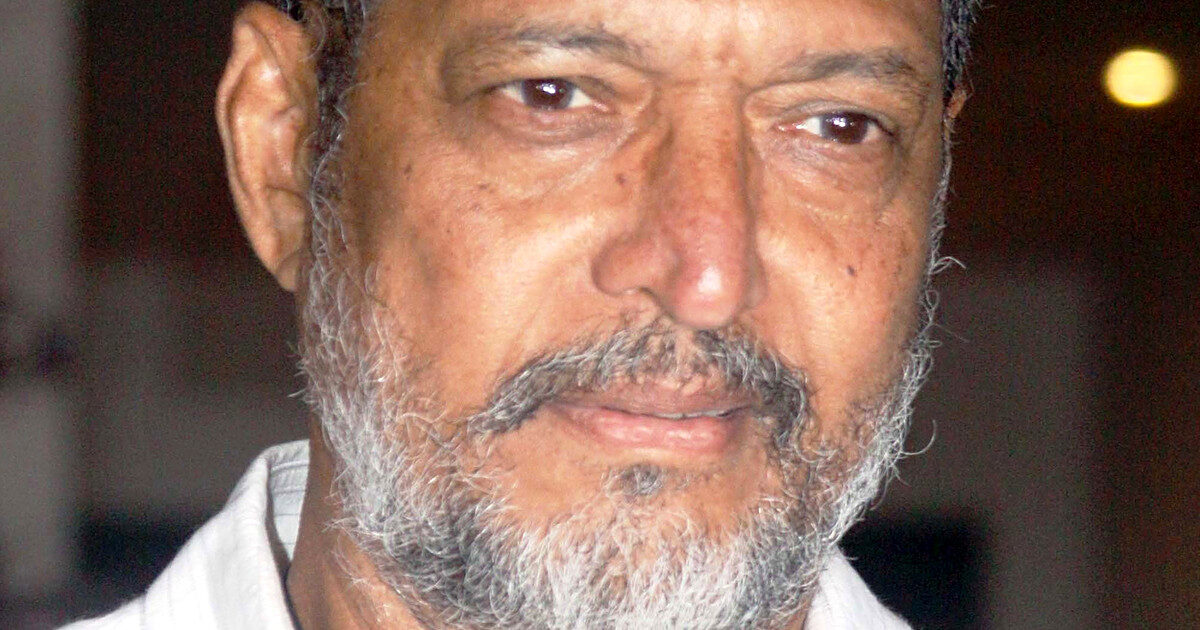
Nana Patekar, the National Award-winning actor who built a second career as a national-level rifle shooter, died on the morning of October 8. He was found unconscious at his home in Dona Paula, Goa, and was rushed to Manipal Hospital. Doctors tried to revive him for around 45 minutes, but he was declared dead around 5:20 am. The cause was given as a heart attack.
His son, Malhar Patekar, confirmed the death to local media.
A late start at the range
For most film fans, shooting means a camera. For Patekar, it also meant a rifle. He picked up the sport only in his 40s, after years of being chief guest at shooting prize ceremonies. In a 2011 conversation with Times of India, he said he tried many guns and worked his way up to hitting targets as small as “mineral bottle caps”.
His shift to competition came around 2001, when he was about 49. He trained at ranges such as Balewadi in Pune and Mhow, and the preparation he had done with the Indian Army for his 1991 film Prahaar made him a natural with a rifle.
The medal years
- 2004: Silver in the 300m big-bore event at the 48th National Shooting Championships in Indore.
- 2007: Team bronze with Maharashtra, scoring 549/600 and finishing 13th out of 49 participants.
- Recognition: The 2007 showing earned him the tag “renowned shot”, which allowed duty-free import of a rifle.
That three-year arc took him into his mid-50s; by 2007, at 55, he was not just a celebrity participant but a “renowned shot”. After that result, he promised to shoot 590 points out of 600 with a new rifle. He kept competing at national and state level into his 60s, then continued to shoot recreationally, often carrying his equipment to outdoor film shoots when a range was nearby.
Why his second career still resonates
It is rare for a working film actor to compete seriously in an Olympic-style sport. Patekar did it in his 40s and 50s, when most athletes are retiring rather than starting. That late discipline made him unusual in Bollywood and gave his intense on-screen presence another layer of credibility.
For fans, the best way to remember him is to revisit the work that used that training, starting with Prahaar, and to appreciate that some of his stillness on screen was earned far from the camera.
Source: Hindustan Times