
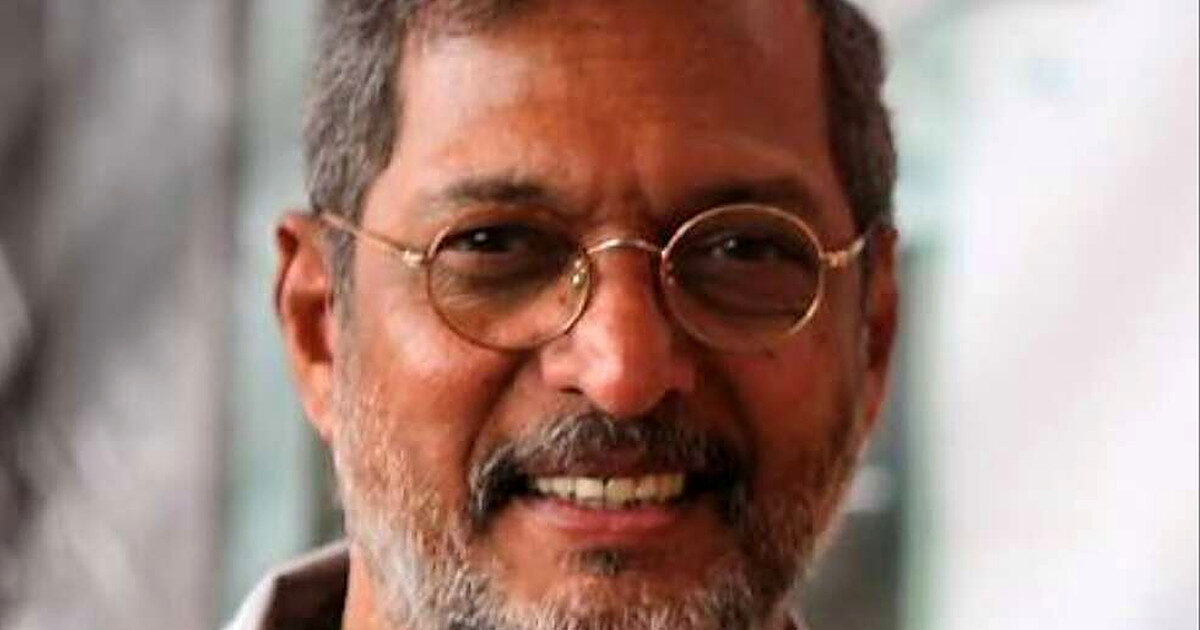
Nana Patekar has died at 75 after a cardiac arrest in Goa. Tributes have followed from the Prime Minister’s office, cricketers, co-stars and film lovers. But the most fitting memorial is the work itself — a library of dialogue delivery that could turn a single line into a scene, and a scene into a memory.
The lines that made him immortal
Patekar’s gift was not simply volume. It was the certainty behind the words, as if he had already won the argument before the camera rolled. That certainty let him move between political fury, deadpan comedy and quiet grief without losing authority.
- “Ek machhar saala aadmi ko hijda bana deta hai” — Yeshwant (1997). A small irritant is turned into a metaphor for how power can be undone by dignity. It remains the line most linked to his name.
- “Maratha maarta hai, ya marta hai” — Tirangaa (1993). A four-word battle cry with no middle ground, and one of the most quoted lines of his early action years.
- “Aa gaye meri maut ka tamasha dekhne?” — Krantiveer (1994). The film won him the National Film Award for Best Actor, and this question, thrown at a crowd watching an execution, is cinema’s sharp charge against public apathy.
- “Saale apne khud ke desh mein ek sui nahin bana sakte, aur hamara desh todne ka sapna dekhte hain” — Krantiveer (1994). A monologue that turned manufacturing failure into a wider statement about national pride.
- “Behtar hai tu apna iraada badal de, nahin toh main tera naksha badal dunga” — Ghulam-E-Mustafa (1997). A threat dressed as a suggestion, with the unsettling calm that became his trademark.
- “Ek police inspector joint commissioner ke saath kya argument karega? Hum sab system ka hissa hain” — Ab Tak Chhappan (2004). A quieter register: the tired, procedural voice of a man resigned to the machine.
- “Sur mhanto saath de, diva mhanto vaat de, unhamadhlya mhataryala fakta tuza haath de” — Natsamrat (2016). A retired actor’s plea for a steadying hand, and a glimpse of the vulnerability always beneath the growl.
- “Yeh sharif log bahut badmaash hote hain, sharafat ki zubaan nahi samajhte hain” — Welcome (2007). Deadpan proof that his menace translated perfectly into farce.
Why the range matters
The list is not just nostalgia. It shows an actor who could weaponise a whisper as easily as a shout, and that is why Hindi and Marathi cinema feel the loss so acutely. If you are rediscovering him now, start with Krantiveer and Yeshwant for the fire, then Welcome and Natsamrat for the control. The lines endure because the conviction behind them was real.
Source: Filmfare