
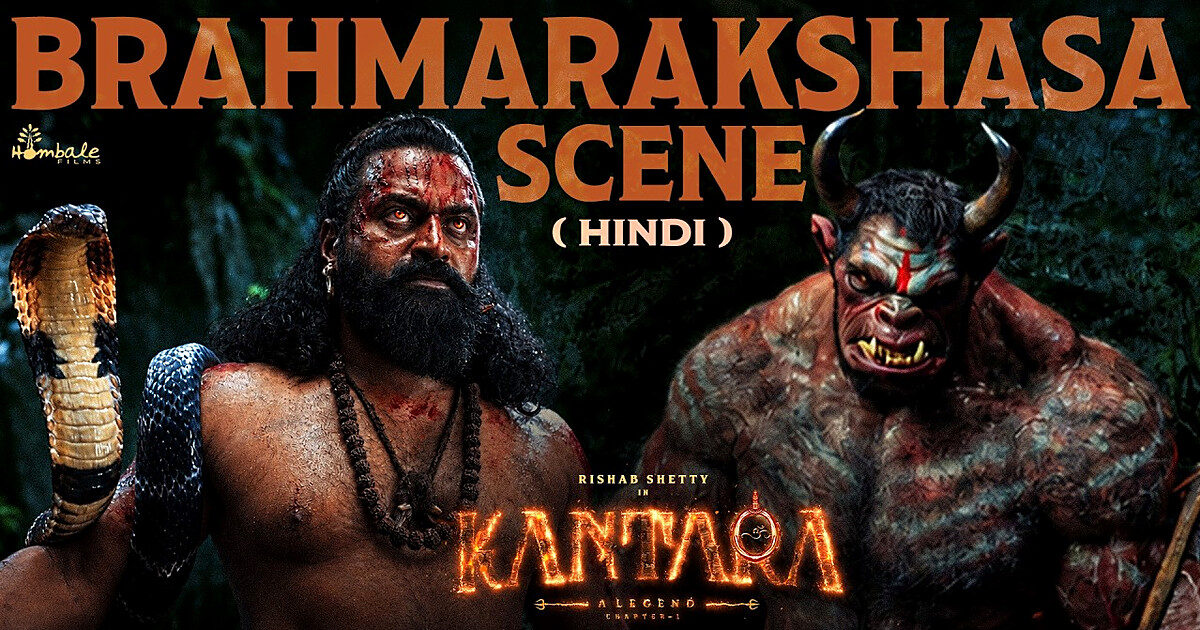
1. The setup: where the scene sits in the film and what is at stake
I went into this clip expecting a jump scare, and instead got something older. Kantara Chapter 1 reaches back into the world that made the 2022 film feel like a ritual more than a movie. Rishab Shetty’s character is already carrying the weight of his people and the forest when this scene leaves him alone with a Brahmarakshasa, so the stakes are not just survival but whether the old ways will keep him or swallow him.
2. The turn: where the scene changes gear, and how the film gets there
For me, the scene turns when the Brahmarakshasa stops being an outline in the dark and becomes something Rishab Shetty can hear. The patient, almost documentary calm Hombale knows how to hold is there at the start. The film gets there by letting the sound drop first, then cutting to the creature’s eyes, so the geography flips: he is not watching the forest, the forest is watching him.
3. The line: the line or the moment people quote, and why it lands
It is not a spoken line I keep repeating; it is the Brahmarakshasa’s first breath after the music stops. That low exhale lands because Ajaneesh Loknath pulls the score away just before it, leaving only the hiss and Shetty’s sharp inhale. The writing trusts us to sit in silence long enough for the fear to arrive on its own.
4. The performance: what the actor or actors do, precisely, that a lesser scene would not
Rishab Shetty plays it from the spine outward. I kept watching his hands and his breathing: he does not flail or rush the scare, he stills, lets his chest go tight, and then lets the horror move through his eyes. When he finally steps back, it is a stagger, not a sprint. A lesser scene would shout; this one whimpers with the whole body.
5. The craft: the staging, the cut, the music, the sound, the camera, whichever carries it, with one specific choice named for each you mention
The staging frames him small in a wide shot, swallowed by the dark at the edge of the frame. The cut that matters is the hard cut to the Brahmarakshasa’s eyes the moment the drone drops. The music works by subtraction: Ajaneesh removes the percussion so only a low drone breathes. The sound pans the creature’s hiss to the left, making the threat feel close but not centered. The camera pushes in slowly while Shetty stays still, so the pressure comes from the frame, not from him.
6. Why it travels: why this scene is the one people share, decades or days later
I think this is the scene people share because it restores the eerie, rooted folk-horror energy the Kantara world promised. It does not look like imported horror or CGI overload; it feels like a local story told in a dark room. That is rare, and it travels because it scares you before it explains anything.
Watch the original: Hombale Films on YouTube. Shown for review and comment; the rights stay with the makers.