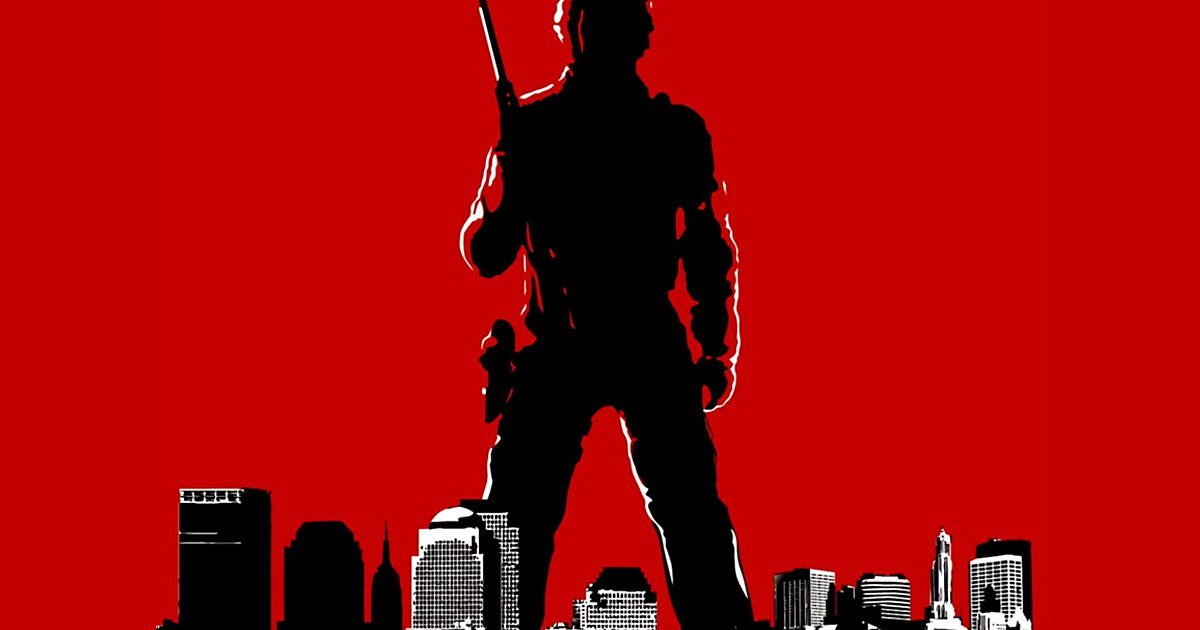
When a film is written, directed, scored and edited by the same person, it is already a control experiment. When it is shot in 20 days for $100,000 and still becomes a cult classic, it is a manual. This week Assault on Precinct 13 (1976) turns 50, and the production story behind John Carpenter’s siege thriller remains as lean and thrilling as the movie.
Shot in 20 days for $100,000
Shooting started in November 1975 and wrapped in only 20 days, including Thanksgiving, on a budget of $100,000. The schedule broke into two weeks of interiors followed by two weeks on location. Carpenter called it the most fun he has ever had directing.
Carpenter did four jobs himself
Carpenter wrote, directed, scored and edited the film. In post-production he cut it under the pseudonym John T. Chance, with frequent collaborator Debra Hill as assistant editor. He described the editing process as a bare-bones process.
The money was a family matter
After Dark Star, Assault and a script called Eyes were supposed to be two low-budget Carpenter films financed by J. Stein Kaplan. When Eyes was sold to Barbra Streisand and Jon Peters and later renamed Eyes of Laura Mars, the producers concentrated on Assault. The two families of the producers formed the CKK Corporation to finance the film.
An obscure cast with real-life edge
The main cast was mostly experienced but relatively obscure. Darwin Joston, who plays death row-bound Napoleon Wilson, had worked primarily in theatre and television and was also Carpenter’s next-door neighbour. Tony Burton, soon to be known in the Rocky films, was cast as convict Wells partly because of his own prior prison stint for armed robbery.
A first-timer on Panavision
The film was shot on 35-mm Panavision in a 2.39:1 anamorphic aspect ratio on Metrocolor film stock, and it was Carpenter’s first experience with Panavision cameras and lenses. After the first night of dailies, art director Tommy Lee Wallace said his jaw dropped. The footage was projected on a bedsheet in the producer’s ratty apartment:
This looked like a zillion dollars. This looked like a real movie.
Old jails, a studio and a closed freeway
Interiors of the police station were shot on the now-defunct Producers Studios set. Exterior shots and jail cells came from the old Venice police station. The bus travelling to Sonora was shot on a closed section of the Los Angeles freeway system, with cast and crew having lunch on the freeway.
USC students played the dead gang
The first scene, in which gang members are gunned down by cops, was shot at USC. The gang members were played by USC students, who Carpenter remembered had a lot of fun finding ways of dying while spilling blood over themselves. His low-budget philosophy was to shoot as little footage as possible and extend scenes for as long as he could.
The editing mistake nobody can see
Panavision takes up the entire negative, but the Moviola editor cannot show the whole image. An improper cut can slice half a sprocket into the film and create a cut out of frame mistake, which happened to Carpenter. He was not proud of it, but it did not matter:
It was so dark, no one could see it, thank God!
A cheap shoot with a pricey finish
Carpenter insisted on the best processing money could buy at the MGM color labs and the best post-production sound at Samuel Goldwyn Sound. Wallace, still a self-described green recruit, was asked to cut sound effects. The expense ate up a huge amount of the budget; Wallace remembered the production manager fuming that they were exploiting people to pay for processing.
That is our breakdown of how a 20-day, $100,000 shoot became a 50-year cult favourite. Which detail gets you: the freeway lunch, the next-door neighbour, or the invisible cut? Tell us your favourite fact.
Facts from Wikipedia: Assault on Precinct 13 (1976 film), available under CC BY-SA 4.0.
Film images from TMDB. This product uses the TMDB API but is not endorsed or certified by TMDB.