
The wedding song from Nitesh Tiwari’s Ramayana: Rise Of A Legend has turned into one of the most discussed musical moments around the film. The Hindi version, ‘Mangal Rang’, sung by Arijit Singh and Shreya Ghoshal, has been praised and questioned in equal measure. Some listeners hear echoes of A.R. Rahman’s earlier melodies such as ‘Kun Faya Kun’, while others ask whether its Sufi-inflected texture suits a Hindu epic.
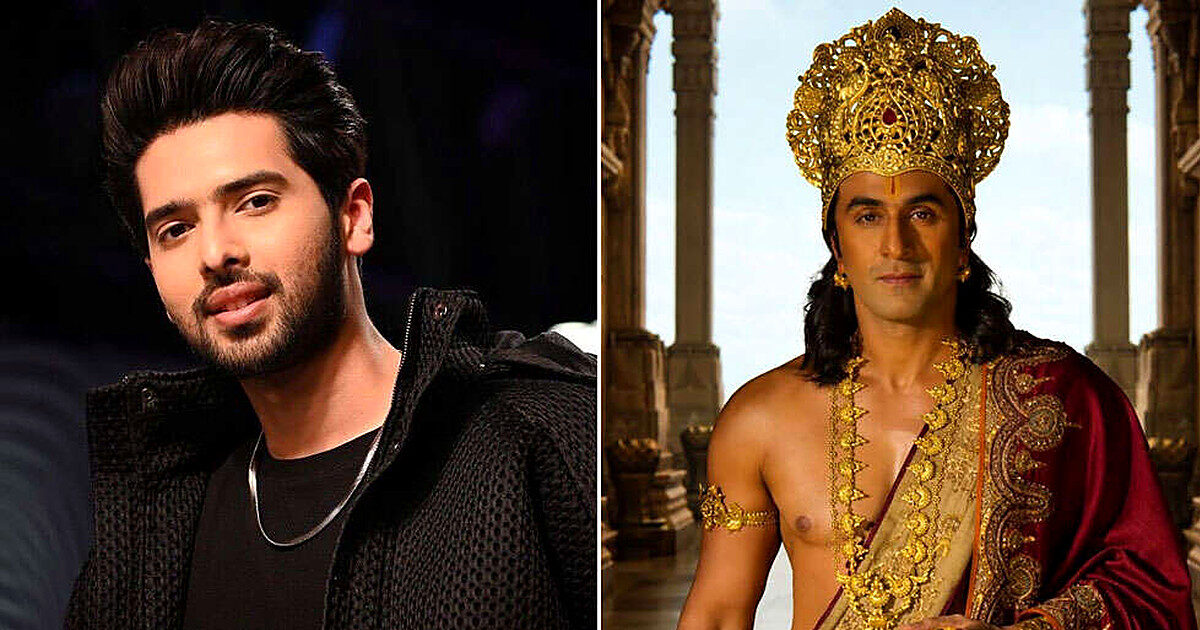
Now Armaan Malik, who sings the Kannada version, ‘Mangala Sangama’, with Bela Shende, has offered his own reading.
The brief was devotion
Speaking to News18, Malik said the music team was not chasing a genre debate. The goal was to capture the purity and divinity between Ram and Sita on screen. ‘How a listener interprets the music is always going to be subjective,’ he said, ‘and that’s the nature of art.’ For him, the only focus was ‘the deep devotion of the moment’.
The actors complete the song
Malik argued that a playback singer supplies only half the emotion. Ranbir Kapoor and Sai Pallavi, he said, internalise the music and reflect it with honesty. That, in his words, is what makes the song reach people as intended. He also noted the responsibility of portraying Shri Ram and Mata Sita, and said the two leads bring ‘an innate grace’ to the visual world.
Here is the debate in short:
- The track: ‘Mangal Rang’ in Hindi; ‘Mangala Sangama’ in Kannada.
- The criticism: Sufi-leaning textures in a Hindu epic, and perceived echoes of A.R. Rahman.
- Malik’s position: Interpretation is subjective; devotion was the creative brief.
- The milestone: Voicing Ranbir Kapoor, an actor he grew up watching.
A milestone behind the mic
For Malik, the song is personal. He described singing for Kapoor as a huge milestone, because he grew up watching the actor define cinematic romance and emotion. That context matters for fans: when an artist calls a song a milestone, it usually means they gave it more than standard playback energy. The devotion debate may not end, but the singer’s intent is now on record.
The line between critique and context
A mythological track has to work on two levels: it must feel true to the story’s spiritual register and serve the emotional grammar of a big-screen adaptation. Malik’s defence is essentially a filmmaker’s argument: the music was composed for the scene, not for a genre purity test. Listeners may still prefer a more traditional sound, but the team’s intent is clear.
Source: Filmfare