
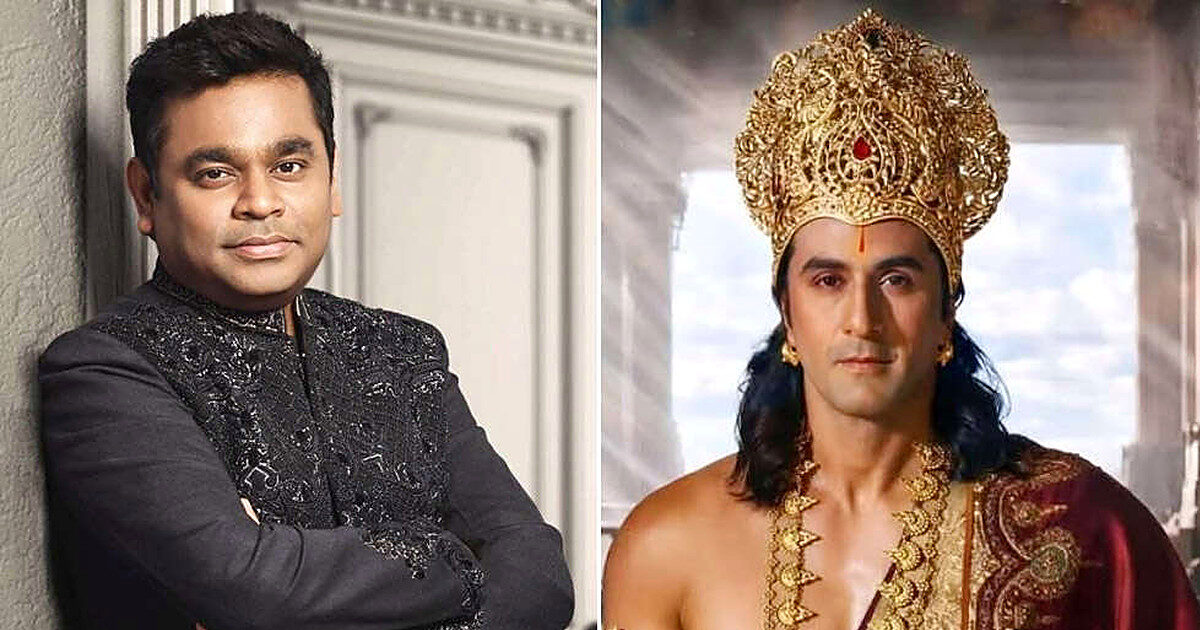
When two songs from Nitesh Tiwari’s Ramayana landed, listeners had plenty to say. Ravana Tandav and Mangal Rang quickly became the centre of online debate, and AR Rahman found himself in the middle of it. But in a new interview with Filmfare, the Oscar-winning composer sounded unbothered.
Rahman’s argument is about process. The team works through so much “filtration, ideation, and iteration” that there is no energy left to look at feedback, he said. The music is released only after being tried and tested, so the composer would rather let it travel than track every post.
The apology cycle
He added that his son keeps telling him the same story: people who criticised the tracks yesterday are now apologising. Rahman’s response is simple: he has done the work sincerely and hopes audiences celebrate it.
That confidence comes from a three-decade journey. Listeners often romanticise an artist’s earlier music and expect the same milestones to be recreated, he noted. But stagnation was never part of his plan.
For Hindi cinema fans, a Ramayana adaptation carries extra weight. It is one of the most ambitious mythological projects in Indian cinema, and its music gets judged as both a soundtrack and an interpretation of stories audiences have lived with for generations.
A five-language canvas
Stepping into Nitesh Tiwari’s adaptation, which stars Ranbir Kapoor and Sai Pallavi, felt like a fresh cultural responsibility for Rahman. The soundtrack has been rendered in five languages, widening its reach beyond Hindi-speaking audiences and acknowledging the story’s pan-Indian pull.
The Hans Zimmer factor
Perhaps the biggest surprise is Rahman breaking his solo rule to collaborate with German composer Hans Zimmer. He called the collaboration a blessing that should spark global interest and help the film’s sound travel far beyond India.
The reaction Rahman describes is a familiar loop in the streaming era: first impressions form within hours, then get revised once listeners sit with the full album and the visuals. By focusing on the work, he is betting that the music’s shelf life will outlast the first two days of debate.
What to watch for
- The first part of Ramayana arrives in cinemas this November.
- The soundtrack is being released across five languages.
- Hans Zimmer joins Rahman on the score.
The early noise is part of any large-scale mythological release. Rahman’s answer is not to chase it but to let the finished work speak. As release nears, the real test moves from comment sections to cinemas.
Source: Filmfare