
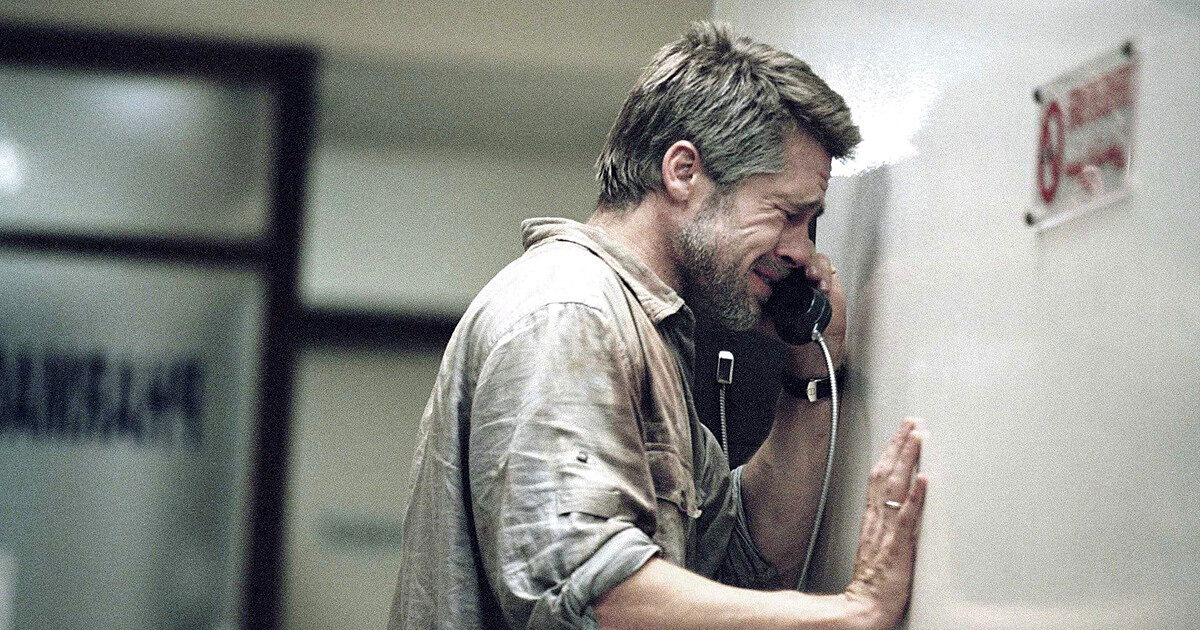
Babel turns 20 this week, and its globe-spanning production still reads like a masterclass in parallel filmmaking. Alejandro González Iñárritu’s 2006 psychological drama, written by Guillermo Arriaga, completes the Death Trilogy and cuts between Morocco, Japan, Mexico and the United States. The shoot’s details are as unexpected as the film’s interlocking structure.
A film with its own health warning
When the film was released in Japan in 2007, several moviegoers reported queasiness during a scene in which Rinko Kikuchi’s character visits a nightclub filled with strobe lights and flashing colors. In response, distributors administered a health warning describing the scene.
The star who wasn’t deaf
Rinko Kikuchi auditioned for Chieko in July 2004, when the then 23-year-old was 24 when actual filming began. Iñárritu was surprised by her talent but reluctant due to her not being deaf. The casting process continued with hundreds of actresses over the following nine months, with Kikuchi ultimately winning the role in April 2005, a week before filming began. At the volleyball match in Tokyo, most of the audience spectators were played by deaf people.
Pitt chose Babel over The Departed
Brad Pitt backed out of a role in The Departed, which he produced, in order to film Babel. The film itself was an international co-production among companies based in Japan, Mexico, the United States and France.
Real immigrants in the Mexico shoot
The film extras portraying migrants in the Mexico shooting were real immigrants hired by the production company. Babel’s multi-narrative drama portrays interwoven stories taking place in Morocco, Japan, Mexico, and the United States.
One rifle ties the four storylines together
The central connection between all of the main characters is the rifle. Yasujiro Wataya visits Morocco for a hunting trip and gives the rifle as a gift to his guide, Hassan Ibrahim, who then sells it to Abdullah, from where it gets passed on to his sons. Susan Jones is shot with that very same rifle, which also has a tragic impact on Amelia Hernández’s life. The stories are not told in linear or chronological order; as the movie unfolds, the audience learns how the plots are intertwined.
A score that won the Oscar and BAFTA
Gustavo Santaolalla composed and produced the film’s original score and songs. The closing scene features “Bibo no Aozora” by Ryuichi Sakamoto. The musical score won the Academy Award for Best Original Score and the BAFTA Award for Best Film Music, and was nominated for the Golden Globe Award for Best Original Score.
The $25 million film that made $135.3 million
Babel was released in seven theaters on 27 October 2006, then released nationwide in 1,251 theaters on 10 November 2006. It grossed $34.3 million in North America and $101 million in the rest of the world, for a worldwide box office total of $135.3 million, against a budget of $25 million. That makes it the highest-grossing film of González Iñárritu’s Death Trilogy, both in North America and worldwide.
That is a lot of ground for one film to cover. Which Babel production fact still catches you off guard?
Facts from Wikipedia: Babel (2006 film), available under CC BY-SA 4.0.
Film images from TMDB. This product uses the TMDB API but is not endorsed or certified by TMDB.