
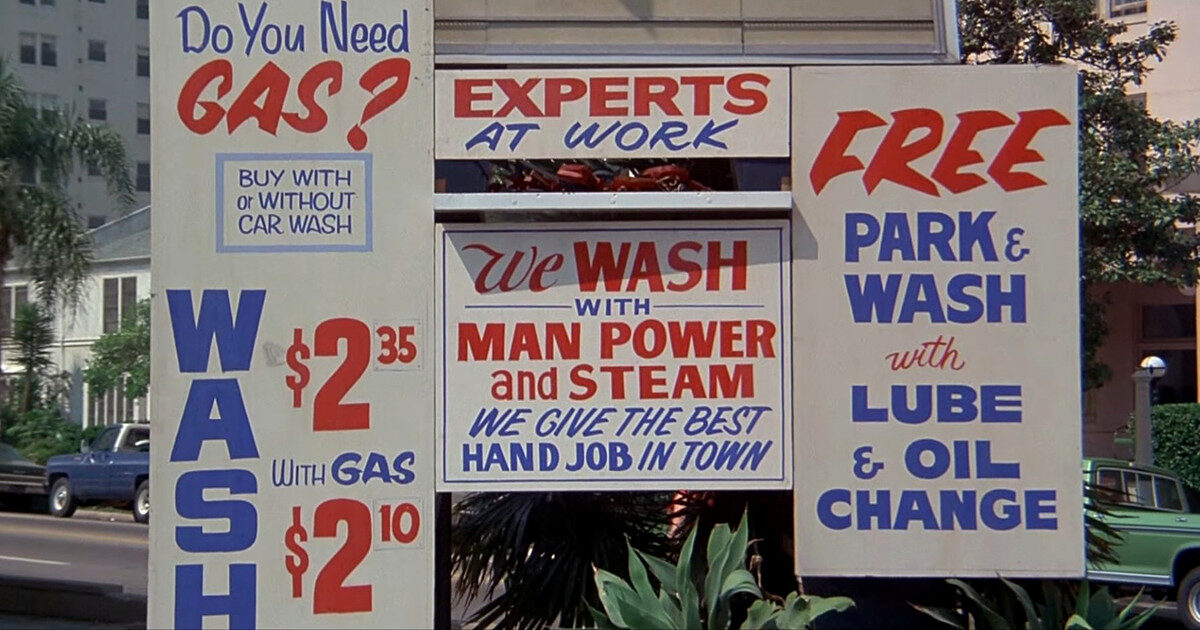
Car Wash turns 50 this week. Released on 15 October 1976, Michael Schultz’s ensemble comedy followed a close-knit group of employees over a single Friday at a Los Angeles car wash — and the making of it is just as lively as the Dee-Luxe Car Wash itself.
It started as a stage musical, not a movie
The producers originally intended the project to be a stage production, with a replica car wash on stage. If it worked, they hoped it could be adapted as a movie. Universal Pictures’ then-president Ned Tanen persuaded them to make the film version instead. Joel Schumacher was chosen to write based on his work writing Sparkle.
The soundtrack was recorded before a single scene
Director Michael Schultz wanted the actors to actually listen to the same music that would later be added in post-production while filming the scenes. So the soundtrack was recorded before filming commenced. Rose Royce recorded the album, and it became a major success.
Rose Royce took the title track to #1
The title track, written and produced by Norman Whitfield, was a #1 hit and one of the biggest hit singles of the disco era. The album yielded three Billboard R&B Top Ten singles: “Car Wash,” “I Wanna Get Next to You,” and “I’m Going Down.”
The Pointer Sisters arrived as the Wilson Sisters
The Pointer Sisters’ “You Gotta Believe” was performed during their cameo as the Wilson Sisters in the film and was a Top Twenty R&B hit. The Car Wash soundtrack won a Grammy Award for Best Score Soundtrack Album at the 19th Annual Grammy Awards in 1977.
A “bomber” who was only taking a liver test
Over a single Friday in July, the Dee-Luxe Car Wash welcomes all manner of strange and unusual visitors. Employees must deal with a man they believe is the notorious “pop bottle bomber” being sought by police. The strange man’s “bomb” turns out to be simply a urine sample he is taking to the hospital for a liver test.
Critics praised its sunny, lively chaos
Roger Ebert gave the film three-and-a-half stars out of four, calling it “a sunny, lively comedy” with a “tremendous sense of life.” Vincent Canby of The New York Times called it “a cheerful, somewhat vulgar, very cleverly executed comedy.” Rotten Tomatoes scores it 86% from 29 reviews, while Metacritic assigns 71 out of 100.
Lindy’s comeback still lands
Film historian Vito Russo cited Lindy, played by Antonio Fargas, as both funny and challenging through his gay militancy. When Abdullah Mohammed Akbar criticizes Lindy’s cross-dressing, Lindy replies, “Honey, I am more man than you’ll ever be and more woman than you’ll ever get.” Russo deemed the moment potentially revolutionary had it not been placed strictly within a comedic context.
Which piece of Car Wash history would you save: the stage-musical start, the music-first shoot, or Lindy’s line? Tell us your favourite fact.
Facts from Wikipedia: Car Wash (film), available under CC BY-SA 4.0.
Film images from TMDB. This product uses the TMDB API but is not endorsed or certified by TMDB.