
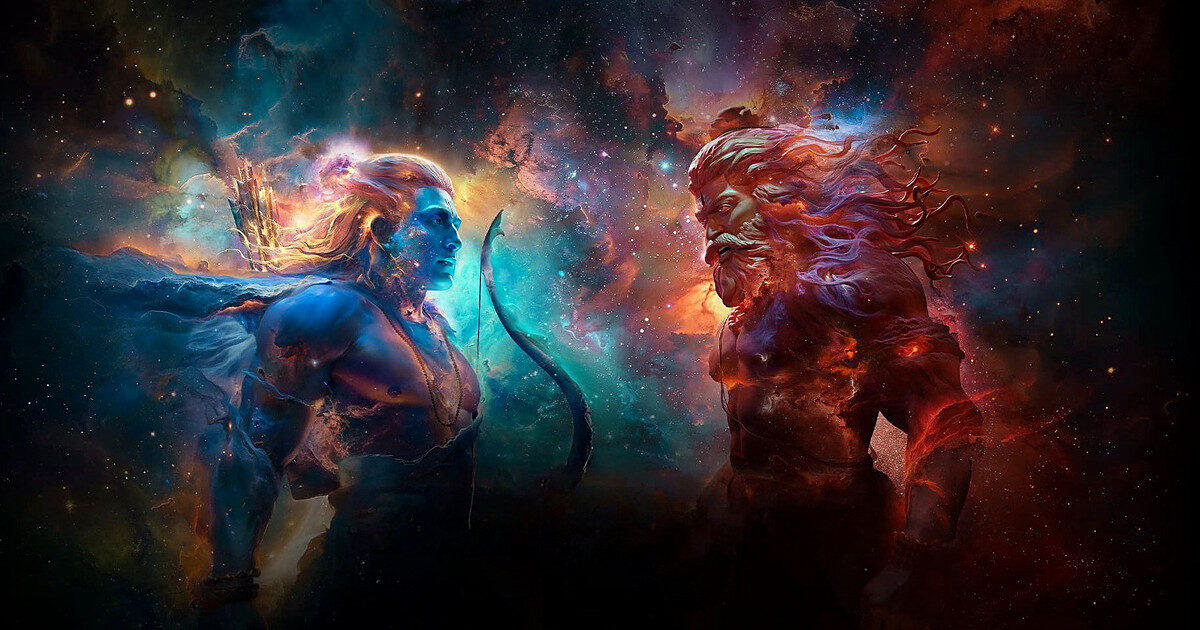
One action sequence. Six and a half years. That is the scale director Nitesh Tiwari has put on the Ravana-Jatayu fight in Ramayana: Rise of a Legend, as he shares the production timeline behind one of the film’s most awaited moments.
Why one battle took years
Speaking with Shreyas Media, Tiwari said the sequence was created from scratch, starting with the first briefing to the artist and ending only when the final frame was locked. “Six and a half years. One action sequence,” he said.
He added that thousands of people worked on the sequence, and that he could spend an hour explaining the effort that went into it. For fans who have been waiting for the mythological epic, that number reframes the production: a single set-piece can run longer than many complete film shoots.
The Pushpak Viman kept evolving
The flying vehicle at the centre of that fight was no simpler. Tiwari said the team took close to two years to arrive at the Pushpak Viman’s final design, trying around 40-50 versions. The first pass of the Ravana-Jatayu fight had been built around an earlier design; when the final viman looked completely different, the team had to go back and rework parts of the sequence.
Tiwari said the brief was not just to make something that looked like it could fly. “We wanted some kind of science to go into it,” he said, adding that the team believes there was science behind the events of that time. In effects-driven filmmaking, a design is not cosmetic; it drives action, camera angles and the logic of a sequence.
Ranbir Kapoor backs the VFX crew
Ranbir Kapoor, who plays Lord Rama, has been vocal in defending the film’s visual effects team. He said it feels terrible to see the crew’s effort dismissed as AI-generated when thousands of artists are working around the clock, and that perfecting a single frame can take days of manual work.
What to know about the release
- Ravana-Jatayu fight: six and a half years from briefing to final frame.
- Pushpak Viman: nearly two years, with 40-50 designs tried.
- Cast: Ranbir Kapoor as Rama, Sai Pallavi as Sita, Yash as Ravana.
- Release plan: part one Diwali 2026; part two slated for 2027, with Western media reporting a possible Diwali 2028 date.
For fans, the timeline explains why the two-part epic has taken so long to arrive. When the sequence finally reaches the screen, the real test will be whether all that invisible effort reads as spectacle, not just scale.
Source: Hindustan Times