
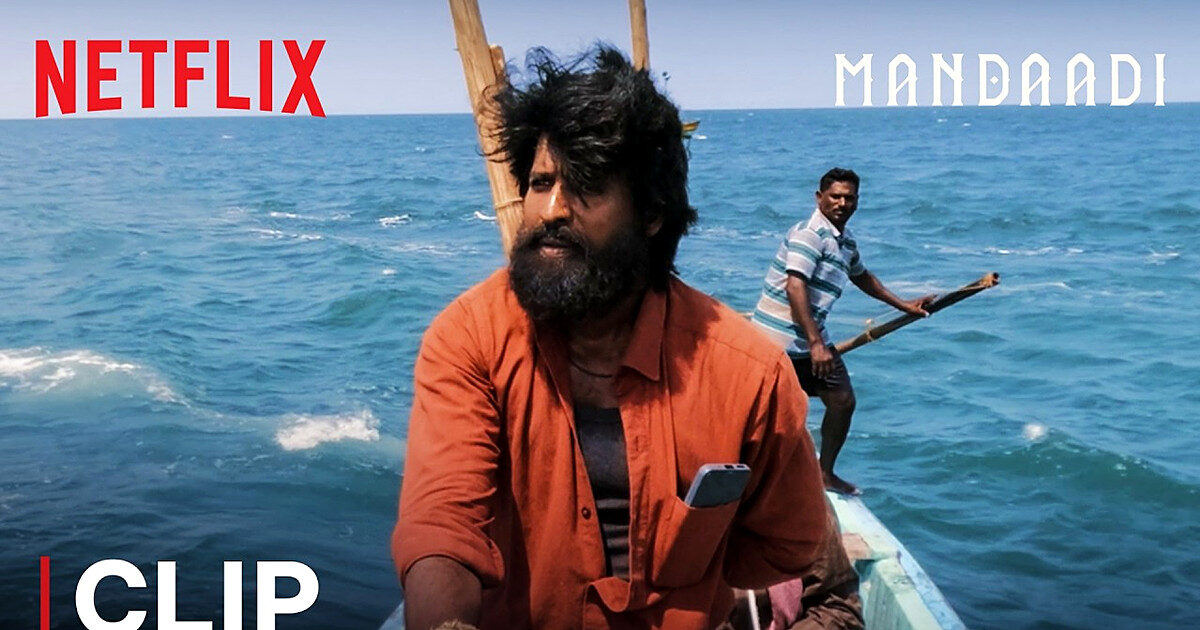
I have watched this clip five times and I still flinch at the same half-second. Mandaadi’s capsize is not a crash; it is a swallow. One moment a crowded boat is fighting a swell, and the next the hull is upside down and the frame is full of water and arms. Here is the craft holding it together.
The setup
The scene sits in the film as a hard turn: passengers are mid-journey, already tense about the weather, and the boat is loaded with ordinary people rather than action heroes. The stakes are plain and physical: stay on the boat, stay above water, stay close to someone. The film does not cheat by cutting to a rescue.
The turn
The gear shift is built on a pause. The boat rises on a wave, the frame tilts, and for a beat the passengers look at one another, unsure whether to laugh or hold on. Then the boat does not roll gently; it goes over hard, and the scene changes from a bad ride to a fight. The film gets there by holding the shot long enough for the boat’s weight to feel inevitable.
The line
The line people quote is not a line; it is the sound the hull makes before the turn. It is a low, tearing groan, almost like a door forced from the other side. That sound lands because the scene does not explain it. Everyone hears it, nobody names it, and then the sea makes the argument for them.
The performance
A lesser scene would give one scream and a lot of splashing. Here the performers do small, specific things: a man reaches for a child instead of the gunwale, a woman’s hand keeps slipping on wet wood, someone else goes quiet instead of loud. The panic is not performed as a chorus; it is distributed, and that makes the danger feel personal.
The craft
The sound carries the sequence. The mix puts the water close, with a hard, slapping hit on each wave, and drops the music out almost completely so the only score is wind and breathing. The camera stays low and near the waterline, cutting only to find a body or a hand, never to a wide shot that would make the danger look small. The staging is one practical flip; the camera does not hide the mechanism, but it keeps you inside it.
Why it travels
This scene travels because it is the moment the film stops being a story and becomes a sensation. People share it for the same reason they share near-miss footage: the water looks real, the weight feels real, and the film refuses to soften the sea. It is a scene you quote with your body, not your words.
Watch the original: Netflix India on YouTube. Shown for review and comment; the rights stay with the makers.