
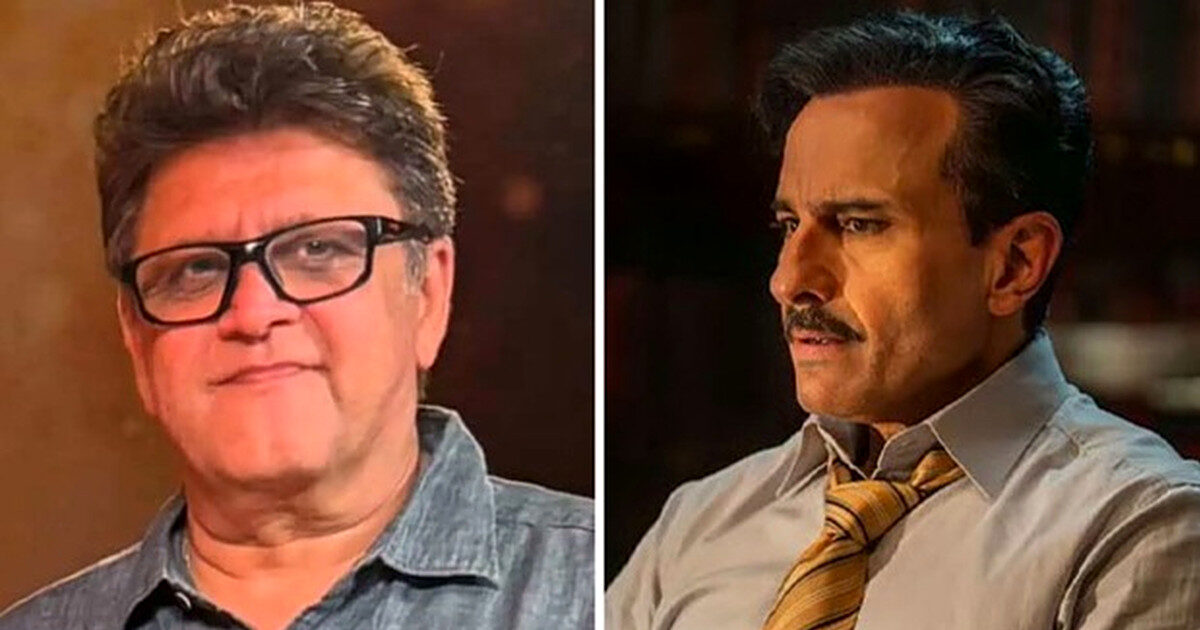
Rahul Dholakia is taking Netflix back to the winter of 1951-52, when independent India attempted its first general election without a national voter register, computers or reliable identity records. His upcoming film Hum Hindustani turns that administrative mountain into a period drama, and it is expected to premiere on Netflix in November 2026.
The election that had to invent itself
Starring Saif Ali Khan, Pratik Gandhi and Deepak Dobriyal, with Mimi Chakraborty, Sarika and Shraddha Dangar, the film follows officials tasked with bringing an entire nation into the democratic process for the first time. Produced by Nikkhil Advani’s Emmay Entertainment, it was shot in Rajasthan and Mumbai between March and June 2025 and announced during Netflix’s 2026 slate launch in February. It also marks Saif Ali Khan’s third Netflix project after Sacred Games and Kartavya.
Dholakia told Bollywood Hungama that the story began after he started reading about elections following Raees. The 2019 CAA protests pushed him to ask how Indian democracy actually began. What he found, he says, was a nation-sized logistical operation built from almost nothing; the princely states’ resistance to democracy became an important parallel plot.
Why the first ballot was a thriller
The obvious drama is scale. India in the 1950s had telegrams, not databases; refugees were arriving, riots were breaking out, and many princely states had no interest in democratic change. Yet the election brought voters from different languages, faiths, castes and classes into a shared exercise.
- No central voter list or identity records existed
- Communication was still in the telegram age
- Partition refugees and communal tension created chaos
- Princely states resisted the democratic process
Dholakia points to the contrast: the United States was still restricting African-American voting in many places into the 1960s, while parts of Europe lagged on women’s suffrage. India attempted universal adult franchise in one sweep. His phrasing: Hindus, Muslims, Sikhs, Brahmins, Dalits, men and women, rich and poor — “all in one line to vote.”
Turning clerical work into cinema
The hardest creative problem, Dholakia says, was that much of the real story is record-keeping, voter listing and ballot logistics. His challenge was making that visual and propulsive without losing the history. The material was first worked out as a limited-series flow chart, then reworked as a feature; the director says the format depended on what was actually greenlit.
Arriving in a heated election year
The film lands as India’s electoral machinery is under scrutiny. The Indian Express has reported that more than 130 million names have been removed from draft rolls across states and territories, and Chief Election Commissioner Gyanesh Kumar faces resignation demands from opposition parties and the youth-led Cockroach Janta Party over the Special Intensive Revision of electoral rolls.
Dholakia is careful not to position Hum Hindustani as a present-day commentary. It remains a period film about the first administrators who created an electoral system nearly from scratch. But the resonance is clear: a line in the film says every Indian should be allowed to vote, and Dholakia says the film “celebrates the effort taken to find every Indian and make that person a voter.”
For fans of historical dramas, the film promises a procedural epic about paperwork becoming nation-building. Watch Netflix’s November slate for the official date.
Source: Bollywood Hungama