
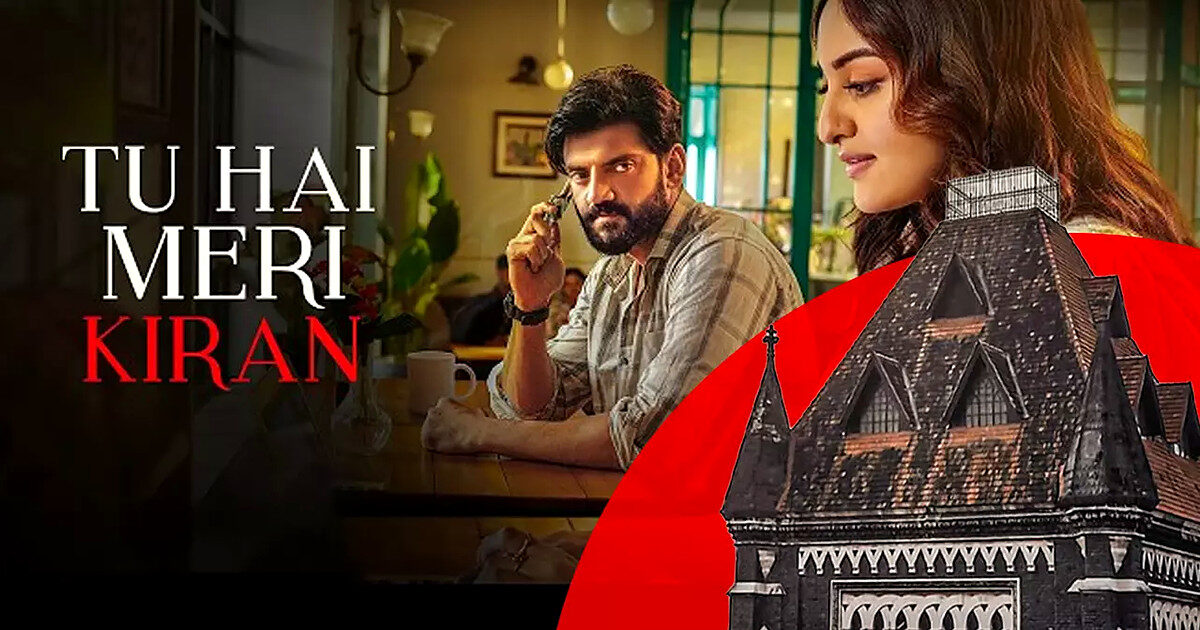
Tu Hai Meri Kiran, starring Sonakshi Sinha and Zaheer Iqbal, may still be two days from its Friday release, but the film’s commercial future now depends on a Bombay High Court condition. The court has directed producer Echelon Productions to deposit ₹8.85 crore, plus 15% annual interest, within three working days. Until that deposit is made, the film cannot be commercially released or exploited through theatres, satellite, digital, OTT, music or any other channel.
What the Bombay High Court ordered
Justice Amit Borkar passed the interim order on October 19, 2026, a few days before the scheduled October 23 release. The court took a conditional approach instead of an outright ban, and the directions go beyond money. The production company must also disclose its exploitation agreements, keep the film’s revenue in a separate designated account, respect the co-producer’s contractual consent rights, and correct or withdraw publicity material that does not follow agreed producer credits within 48 hours.
- Deposit ₹8.85 crore with 15% annual interest in three working days
- Disclose existing and proposed agreements for commercial exploitation
- Maintain film revenue in a separate account and provide accounts
- Correct non-compliant publicity credits within 48 hours
The disagreement behind the order
The dispute arises from a co-production agreement signed on March 27, 2024. Echelon Productions and AND Movie Products LLP were to contribute ₹7.50 crore each, plus GST, towards a total production budget of ₹15 crore plus GST. AND Movie Products has claimed it invested ₹8.85 crore between March 2024 and January 2025. The court recorded that the repayment deadline expired on April 27, 2025, and that a ₹7.50 crore cheque issued by Echelon through Vishal Rana was reportedly dishonoured in January 2026.
AND Movie Products approached the court to protect its investment and contractual rights. The deposit is meant to secure that claim, not settle it. The amount cannot be withdrawn without the court’s or an arbitral tribunal’s approval, and the final question of liability remains open.
Why the court did not ban the film outright
The interim order balances two risks. A complete stop would have threatened the time, money and effort already spent on the project. Releasing it without any security could have made it harder for the co-producer to recover its claim later. The court’s answer was to tie the release to compliance: secure the investment first, and observe the remaining transparency and credit safeguards. The production company’s request to put the order on hold was rejected.
What this means for October 23
As of October 22, the release should be read as conditional rather than guaranteed. The order is aimed at the production company’s obligations; it does not suggest personal wrongdoing by Sinha or Iqbal. For audiences, the key point is that the Friday date is not locked until Echelon confirms it has met the court’s conditions. A final determination of the contractual and repayment dispute will proceed separately, including through arbitration.
Source: Mamaraazzi